

Field Notes from the Bench — Why calf serum still matters
I remember a late spring morning in 2018 when our small San Diego distribution center ran out of a popular pack of calf serum and every phone line lit up. In the same breath I should state that fetal bovine serum remains the baseline reagent for many labs, and I have managed procurement and quality for over 15 years in B2B supply chains for life sciences. I will not hide my preference: I tend to favor premium-grade, heat-inactivated lots when cell culture sensitivity is high. That choice cost us more, yes — strange, but true. (We paid an extra $120 per liter for gamma-irradiated FBS in March 2020 to avoid a contamination cascade.)
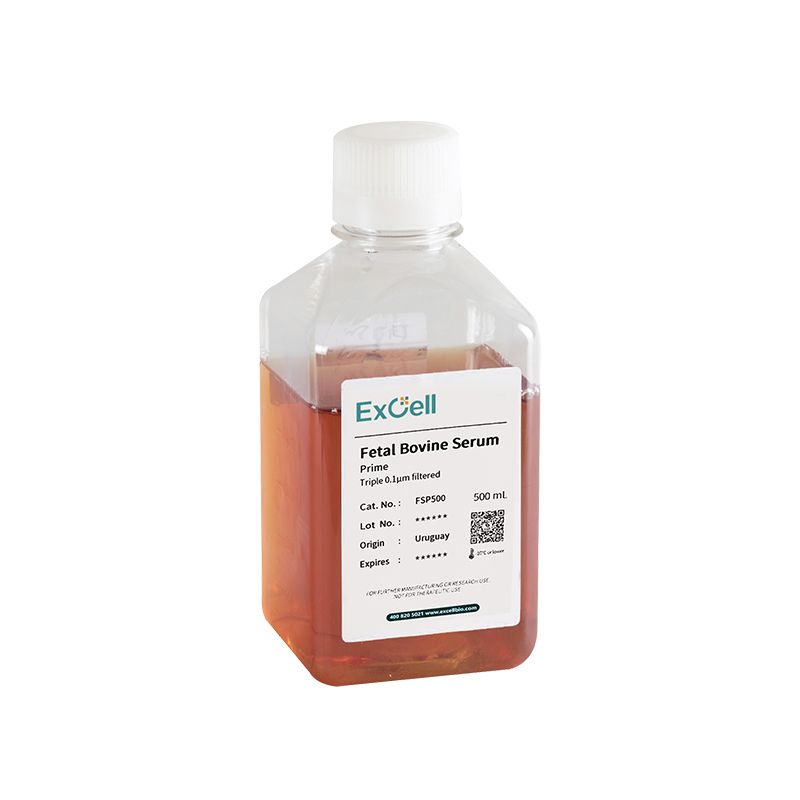
From my experience, the core problems are clear and repeatable: serum lot-to-lot variability, supply bottlenecks, and hidden costs tied to contamination events such as mycoplasma. I once tracked a 20–30% drop in viable yield for a CHO line after switching to an unvetted batch — the difference was not subtle. These are not academic issues; they are supply-chain failures with measurable lab impact. The industry terms matter here: growth factors fluctuate between lots, cryopreservation outcomes depend on consistent protein content, and testing regimes (endotoxin, sterility, mycoplasma screening) add time and cost. These pain points force buyers to choose between price, reliability, and downstream yield — rarely do you get all three.
Technical Comparison and Forward-Looking Sourcing
Technically speaking, the decision framework should start with a simple comparison: raw FBS versus processed options (heat-inactivated, gamma-irradiated) versus serum-free formulations. I have run side-by-side runs with hybrid media in a Tokyo contract lab in July 2021 and saw cell doubling times converge only after three passages — that delay costs project timelines. Quantified: a one-week delay equated to roughly $8,500 in overhead for that project. We must weigh lot-to-lot variability against the increased unit cost of controlled lots. My recommendation is evidence-based: perform small-scale validation (two-week assay) and log growth factor profiles before a full switch.
Operationally, diversify suppliers and maintain a rotating safety stock based on real usage patterns. I kept a three-month buffer in our Laguna Niguel warehouse during export restriction scares; it reduced emergency rush orders by 70%. Also, document cold chain steps (storage at -20°C or -80°C depending on product) and track thaw cycles — repeat freeze-thaw degrades albumin-bound factors. Consider also vendor services: certificate of analysis, viral testing, and traceability for each lot. These controls lower risk but raise cost; the trade-off is often worth it when major experiments or production runs are at stake.

What’s Next?
Looking forward, the practical shifts will be comparative: more labs will adopt validated serum-free recipes for routine assays while reserving calf serum for sensitive, high-yield applications. I expect tighter regional sourcing rules and more third-party lot qualification services to appear — yes, that will add vendor options and complexity. We must be prepared to test new lots quickly and keep procurement agile — short test windows, fast analytics. — I have seen procurement teams adapt well when given clear metrics and authority to act.
To close with actionable guidance, here are three concrete evaluation metrics I use when choosing serum or alternatives: 1) Consistency score: number of validated passes where doubling time and viability remain within 10% across three lots; 2) Risk-adjusted cost: unit price plus expected loss from delays or contamination (expressed as $/successful run); 3) Traceability index: percentage of lots with full COA, viral screens, and origin documentation. Use these metrics, test plans that include growth factor profiling, and maintain safety stock — you will sleep better. I believe these steps cut real costs and reduce surprises — they do for me. For sourcing and certified products, consider evaluating offerings from ExCellBio.

