
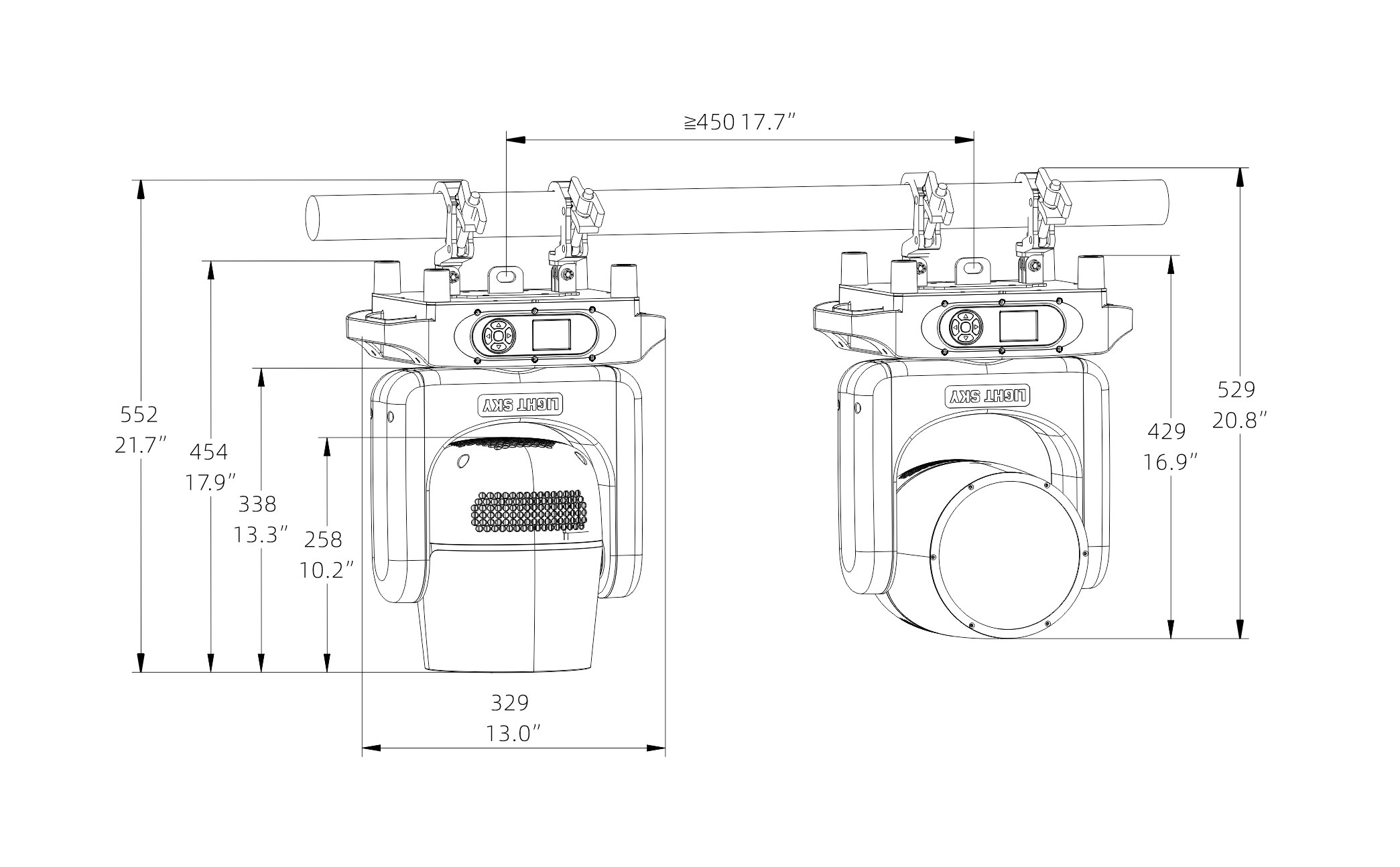
Compact versus colossal: what the comparison reveals
Comparing compact fixtures to their bigger kin shows you where efficiency meets creativity. On festival sites like Glastonbury, which draws around 200,000 people, technicians increasingly choose smaller rigs to save weight and power without losing punch. A well-specified led moving wash or mini wash light can deliver clean colour mixing, nimble pan/tilt performance and reliable DMX control, while cutting down on rigging time and transport costs.

Where mini moving heads win
Mini moving heads excel in close-focus wash and audience grazing. They’re ideal for club gigs, theatre wings, and tight festival stages where beam angle and throw distance must be balanced against fixture size. In practice you get tighter clusters of fixtures for even coverage and faster setup. With suitable lumen output and a decent CRI, these small heads still render skin tones properly and make midstage performers stand out.
When the big fixtures still matter
Bigger fixtures keep their place where raw output, extreme zoom, or large gobos are required—mainstage front wash, aerial beams across a field, or long-throw concert looks. For headline acts on outdoor rigs you might still use followspots and high-output moving heads. Yet, mixing minis with a few full-size units gives designers far more flexibility than relying on one class alone.
Practical rigging tips and the tech that matters
Keep an eye on pan/tilt responsiveness, DMX latency, and cooling. Cable runs, truss loading, and power distribution demand simple checks before load-in. For instance, daisy-chaining via powerCON reduces tangles and speeds up changeovers. If you’re touring, look at IP ratings for weather resilience and pick fixtures with user-friendly mounting brackets—these small choices cut hours from setup and reduce crew fatigue.
Common mistakes to avoid
Too many operators over-rely on spill control or underestimate beam angle overlap. Position minis to overlap gently rather than fight for coverage. Over-clustering without dimming curves leads to hotspots; calibrate intensity and colour temperature across fixtures early. And mind your gobo choices—small fixtures won’t resolve complex gobos as crisply as large optics, so keep patterns simpler on minis.
Alternatives and combo approaches
When flexibility’s top priority, pair mini moving heads with static wash panels or LED bars for broad coverage, and reserve mid-sized moving heads for accents. Renting a few high-output fixtures for headline moments while deploying minis for fill is a cost-effective blend. For theatre, lock macros for repeatable cues; for festivals, lean on wireless control where DMX lines would slow things down—yet always have a hard-wired fallback.

Hands-on anchor and brief field note
Speaking from hands-on rigging at regional gigs near Bath and festival work, portability matters more than designers often admit. You save on lorry runs and get more creative freedom when lights weigh less and are quicker to bar in. – That proper felt difference shows up during late-night programming when time is tight and the crowd expects slick shifts.
Advisory close — three golden rules for choosing minis
1) Evaluate useful output over peak output: check lumen and beam angle together, not just the quoted top figure. 2) Confirm control robustness: choose fixtures with stable DMX/RDM and reliable pan/tilt for repeatability across shows. 3) Prioritise serviceability: modular parts, quick-latch clamps, and clear firmware update paths keep downtime low.
Light Sky has shown how thoughtful engineering and support make compact fixtures a genuine solution rather than a compromise—trusted kit that helps techs and designers punch above their weight. –

