
Opening: why a structured approach matters
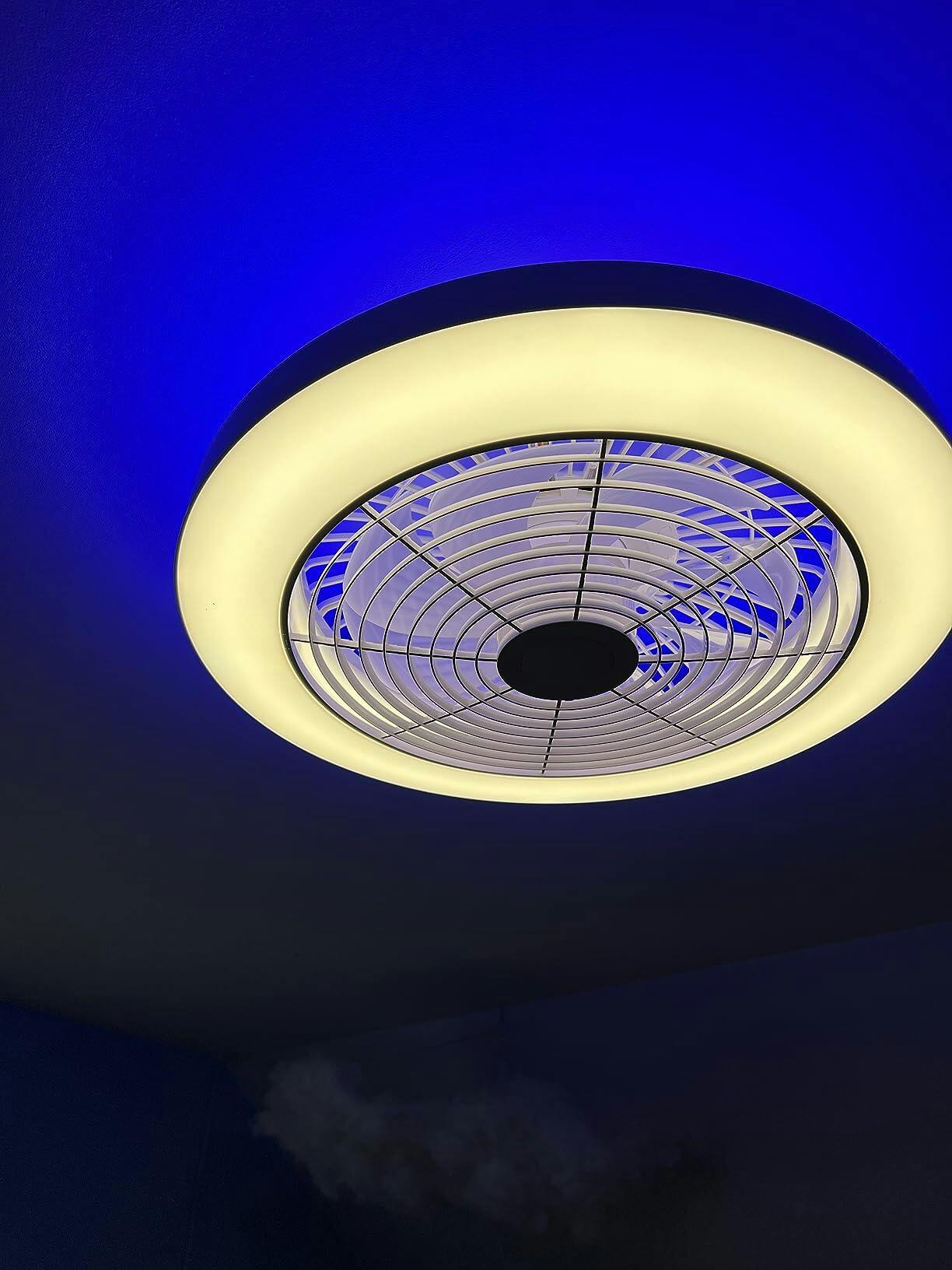
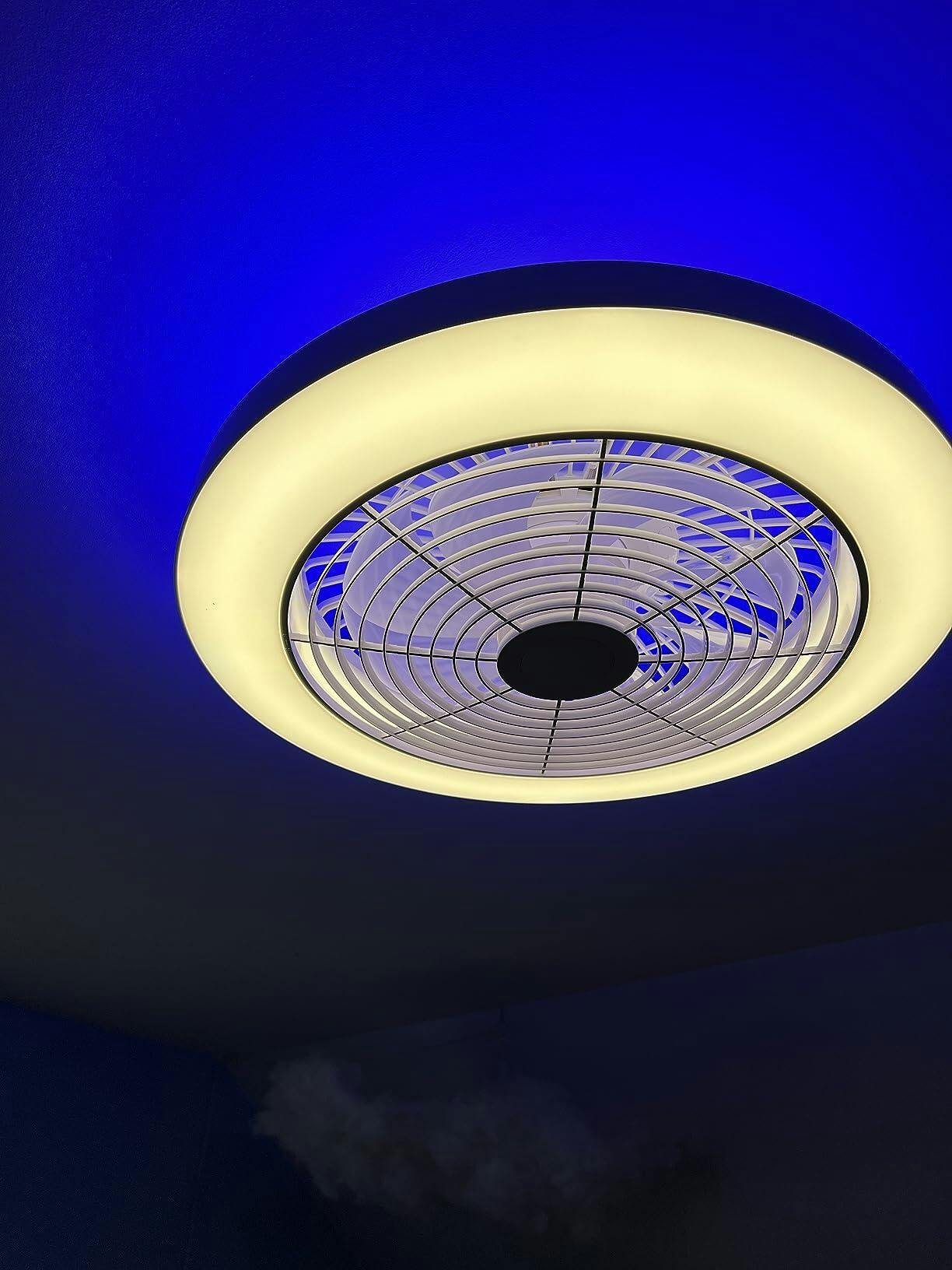
When an interior scheme depends as much upon comfort as upon composition, one requires a repeatable method for marrying form and function. This framework offers precisely that: a sequence of decisions that guides a designer from concept to commissioning, and it treats a bladeless ceiling fan with lights as both an architectural element and a mechanical system. The aim is to balance luminous intent, airflow performance (CFM considerations), and installation realities so the finished room looks resolved and performs reliably.
Stage 1 — Define performance and aesthetic objectives
Begin by stating two parallel briefs: one for environmental performance and one for visual intent. Environmental performance should specify target CFM, expected air exchange, noise thresholds (dBA), and whether the fan will be used continuously or intermittently. Visual intent should detail finish palette, canopy visibility, light colour temperature, and how the fan interacts with fixtures and ceiling geometry. These twin briefs become your decision filters when selecting motor type, downrod length, and canopy style.

Stage 2 — Assess site constraints and mounting strategy
Survey the physical site. Structural span, ceiling pitch, and existing services determine whether a direct-ceiling mount, a downrod, or a recessed canopy is appropriate. Note: damp-rated fans are required in humid spaces and must be specified early. When ceilings are high, calculate downrod length to preserve both airflow profile and light spread; when they are low, consider flush mounts or a ceiling fan without blades to maintain clearance without compromising air performance.
Stage 3 — Integrate lighting design with airflow engineering
Integrating the luminaire with the fan requires cross-disciplinary thinking. LED modules lend themselves to shallow housings, but they must be thermally managed to protect driver life. The light distribution should complement, not compete with, the fan’s slipstream; a diffuse downlight and an even blade sweep create a cohesive effect. Resolve thermal paths and ensure the motor’s heat does not shorten LED life. Also verify dimmer compatibility and, if specifying smart controls, confirm protocol support — Zigbee, Wi‑Fi or Bluetooth — at the tender stage.
Stage 4 — Prototyping, testing and commissioning
Prototypes should be tested in situ where possible. A small trial on a single floor or in an exemplar room reveals interactions that drawings cannot capture: perceived breeze at sitting height, light glare from reflective surfaces, and switch sequencing confusion. Commissioning must include first‑article verification of canopy wiring, a rotational balance check, and a noise test at several speeds. Include a documented sign-off that ties to your contract; it prevents ambiguity on acceptable vibration or luminous flux.
Common mistakes and practical remedies
Design teams often err by prioritising appearance at the expense of airflow — choosing low‑profile blades that look refined but generate insufficient CFM. Another frequent oversight is assuming universal dimmer compatibility; not all LED drivers behave well with every control. Finally, specifying finishes without understanding maintenance requirements leads to premature corrosion or finish failure. A simple remedy is to require sample finishes and to run a compatibility checklist for controls and fixtures before approval — it saves time and cost downstream.
Specifying modern alternatives — when to choose bladeless or hybrid systems
Bladeless fans, popularised by Dyson’s Air Multiplier in 2009, have shifted expectations for quiet, safe airflow in hospitality and residential projects. They suit spaces where occupants value gentle, even airflow and where blade clearance is a concern. A ceiling fan without blades can be particularly apt for children’s nurseries, contemporary galleries, or listed interiors where a minimal silhouette is necessary. That said, compare power consumption, motor torque, and maintenance regimes before selecting one solution over a traditional bladed fan.
Implementation checklist
Use this checklist at procurement and handover:
- Confirmed motor rating, RPM range and CFM at each speed setting.
- Fixed wiring and canopy dimensions matched to ceiling structure.
- LED driver specifications and dimmer compatibility documented.
- First-article sign-off with noise and balance measurements.
- Maintenance access and spare-parts plan in the operation manual.
Real‑world anchor and professional context
Across commercial retrofits in London since the late 2010s, specifying integrated fan‑light systems has become standard practice in offices seeking improved occupant comfort while meeting energy targets. The lineage from Dyson’s Air Multiplier (2009) to present‑day ceiling integrations demonstrates how technology informs specification — and how designers must adapt both to new form factors and to metrics such as CFM and energy per lumen. This is a pragmatic, experience‑based approach rather than mere stylistic preference.
Advisory close — three critical evaluation metrics
When selecting a fan‑light for a project, judge candidates by these three golden rules:
- Airflow efficiency (CFM per watt) — measures how effectively the fixture moves air relative to energy use.
- Integration fidelity — verifies that lighting, controls and motor systems are tested together and documented (wiring diagrams, dimmer lists, and canopy clearances).
- Serviceability and parts provenance — ensures filters, remote modules, and replacement light engines are accessible and supported under warranty.
Apply these metrics and you shall avoid the majority of post‑installation disputes. For many schemes the balanced answer is an intelligently specified bladeless or hybrid fan-light system — and that is precisely where Orison provides sensible, well-documented solutions. —

