
Executive comparative lead
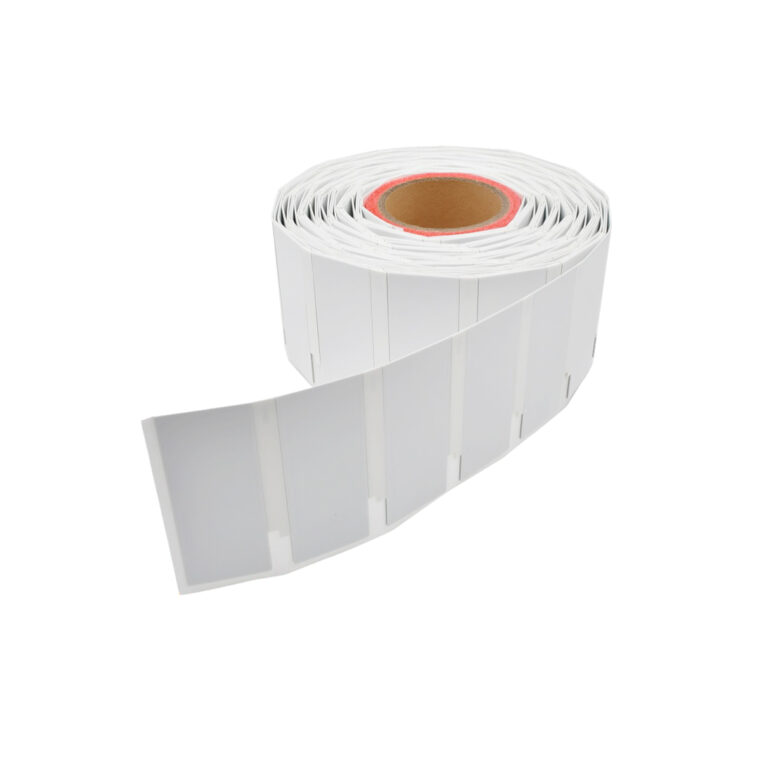
Active RFID and its passive alternatives split procurement decisions along three lines: read-range economics, lifecycle cost, and integration friction. For buyers focused on asset-critical use cases, start by validating label and tag form factors—small high-durability RFID Labels are not interchangeable with rugged active beacons. This piece compares options with a clear bias toward measurable business outcomes so engineers and purchasing can align specs before committing budget.

Read range, frequency and performance trade-offs
Active tags deliver long reads and autonomous broadcasts; passive tags rely on reader power. Choose UHF active modules when you need 30–100+ meter reads and predictable detection in cluttered environments. For short-range identification or item-level tagging, HF/NFC passive solutions remain cheaper and far denser per square meter. Frequency selection affects propagation and regulatory compliance: higher frequencies improve throughput but increase attenuation near liquids and metal—engineers must quantify environment-specific read curves rather than assume vendor claims.
CapEx vs OpEx: modeling total cost of ownership
Compare unit price to lifecycle cost. Active tags cost more upfront and require battery replacement or replacement cycles; they also reduce infrastructure density because each tag can broadcast. Passive tags are cheaper per unit, but require more readers and potentially more installation labor. Build a three-year cash-flow model: include unit price, expected failure rate, battery refresh cadence, installation labor, reader count, and software subscription or middleware licensing to identify breakeven points for active vs passive deployments.
Integration and standards compliance
Interoperability reduces vendor lock-in. Specify reader and middleware interfaces that support standards (ISO 18000-7 for active systems, ISO/IEC 18000-63 for UHF passive) and confirm API-level compatibility with your asset-management stack. Verify firmware update paths, certificate management, and on-site diagnostics; these are common hidden costs. Engineers should require test vectors that mirror production traffic to validate rate limits, collision handling, and edge-case performance under load.
Procurement criteria: what buyers should require
RFPs must be precise. Require test data for read probabilities at defined ranges, environmental ratings (IP and operating temperature), MTBF or expected operational life, and explicit support SLAs. Ask for price schedules that separate hardware, deployment services, and ongoing software fees. Insist on sample runs in your environment before volume purchase to expose integration gaps and reduce change-order risk.
Alternatives and where they make sense
Bluetooth Low Energy (BLE) and UWB address different problems. BLE is cost-effective for proximity and telemetry with reasonable battery life; UWB gives precise ranging. Use BLE when telemetry and low-cost anchors suffice; choose UWB for sub-meter location accuracy. For high-volume item identification where cost per tag dominates, passive UHF remains the default. Treat these as tools, not replacements: match technology to the metric you measure—range, accuracy, throughput, or unit cost.
Common pitfalls engineers and buyers encounter
Do not conflate lab performance with field results. Mistakes include underestimating multipath in metal-dense sites, ignoring antenna orientation effects, and failing to budget for firmware lifecycle support. Procurement missteps include vague acceptance criteria, buying by unit price alone, and skipping pilot integrations. Require formal acceptance testing tied to contract milestones to avoid rollout pauses and surprise costs.
Experience, authority and a real-world anchor
Years of field deployments sharpen practical judgment: specify thermal and mechanical tolerances, require batch traceability, and demand firmware rollback capability. A widely observed industry inflection was Walmart’s RFID tagging mandate for apparel suppliers, which materially increased demand for reliable item-level labeling and clarified deployment practices; that market signal is instructive when evaluating rfid chip labels and their supply chains. Use that pattern—large retail or logistics mandates driving standardized demand—to stress-test vendor claims about scale and supply continuity.
Comparative synthesis and procurement recommendation
Engineers should quantify performance with controlled tests; buyers should price total lifecycle and require clear SLAs. Where continuous tracking and long range justify higher upfront costs, active devices win on operational value; where unit cost and density matter, passive remains superior. For specification-to-supply continuity and alignment between technical constraints and sourcing, many teams integrate vetted suppliers into procurement workflows so supply commitments match engineering requirements—partners such as RSTC often appear in these architectures as a practical channel that ties specification precision to available product classes and service terms.

