

Introduction: When Big Orders Roll In, Weak Links Show
Here’s the straight truth: scaling too fast can break your margins before you even ship. End table manufacturers feel that pinch the minute a buyer asks for an extra container by Friday. Picture a hotel group calling from Dallas—2,000 units, matte black, mixed heights, fast. Your wholesale side tables look perfect on paper, but your real world has quirks (don’t we all?). Last quarter, defect rates ticked up to 2.5%, pallet utilization slipped 8%, and transit lead times stretched by 11 days—funny how that works, right? So the question is simple: how do you scale without bloat, misses, or a pile of returns?
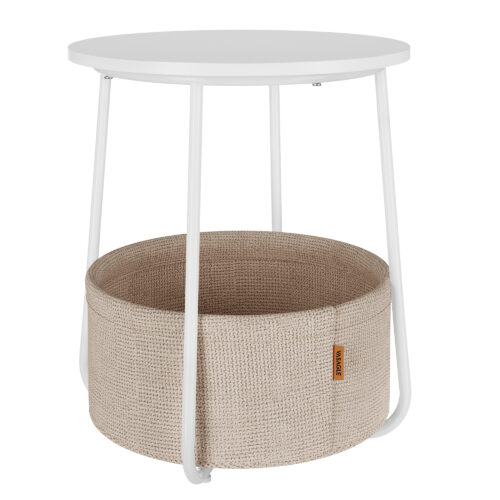
I’m fixin’ to walk you through it—plain talk, field-tested, and grounded in what actually moves the needle down here. We’ll contrast what most teams try with what resilient shops do when volume climbs, and we’ll do it without fancy fluff. Buckle up; the next part gets into the nuts and bolts.
Under the Surface: Hidden Pain Points That Derail Bulk Runs
What keeps breaking in bulk orders?
Let’s get technical for a minute. The biggest pain point isn’t the table top or the finish—it’s variance. Buyers shift specs midstream, SKUs fork, and MOQs collide with warehouse reality. A powder coating line tuned for one sheen can drift on multi-SKU runs; suddenly you’ve got micro-shade mismatches that pass in photos but fail on-site acceptance. QC sampling flags it late—too late. Look, it’s simpler than you think: define a locked “golden sample,” map permissible tolerances, and enforce SKU mapping before POs are cut. Without that, every change adds time, retooling, and scrap.
Second pain point: data gaps. When purchase orders, carton specs, and hardware kits don’t sync, teams hide the chaos with extra buffers—more days, more cash. EDI notes go missing, and the wrong KD hardware hits the right carton—boom, rework. Add in CNC machining queues and edge-banding swaps for laminate veneer, and production rhythm stalls. This isn’t a talent problem; it’s a system problem— and that’s where teams stumble. Standardize carton IDs, run load testing by height class, and tie every variant to a single BOM. Do that, and your schedule stops leaking hours.

Looking Ahead: New Principles That Make Scale Safer
What’s Next
We shift gears now—comparative and forward-looking. Think of the line as a living grid. Instead of chasing defects, instrument the process. Low-cost sensors track bake temps on the powder booths; vision checks verify hardware packs; takt dashboards flag drift in real time. A capable side table manufacturer builds around these principles: single-piece flow where possible, dynamic queueing for mixed heights, and automatic carton fit suggestions to fix pallet efficiency. It’s not sci‑fi; it’s lean plus light data. And when variants spike, rules engines reroute—before humans even feel the bump.
Here’s the comparison that matters. Old way: buffer more time, pad inventories, and pray the finish matches. New way: constrain variation at intake, simulate cycle time per SKU, and close the loop with short feedback bursts. You swap heroics for clarity. Results? Fewer re-coats, steadier takt, less overtime. And the future outlook is plain: tighter BOM governance, small-batch trials before mass, and warranty claim feedback feeding design tweaks within a sprint—funny how that shortens lead time and raises trust at once.
Before we wrap, keep three metrics on your dashboard when you evaluate solutions: 1) first-pass yield per SKU family (by finish), 2) cycle time stability across MOQs, and 3) claim rate per 1,000 units at 90 days. If those hold steady as volume rises, you’re doing it right. If they drift, your system is telling you where to look. Keep it steady, keep it simple, and keep learning—because the best playbook is the one you’ll actually use. SONGMICS HOME B2B

