
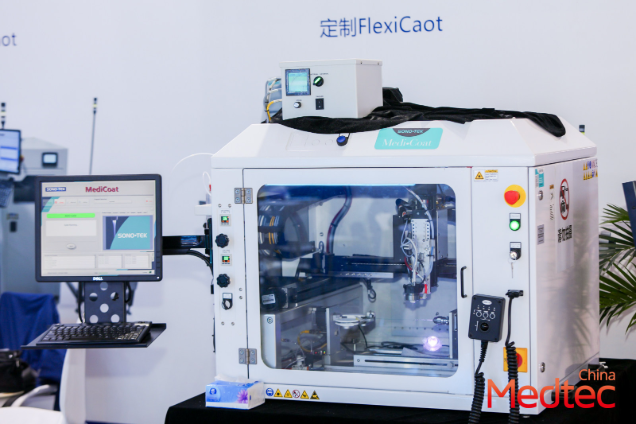
Data-led opening: why the numbers matter now
The crisp math behind yield and filtration can smell like metal and clean linen — precise, cool, necessary. Recent trade-floor conversations showcased at Medtec China 2026 make clear that buyers now demand both high throughput and verified particulate performance when they buy microbial barrier packaging for sterile devices. Shanghai’s production clusters and cleanroom suppliers supply real-world scale to those figures: a typical HEPA filtration target of 99.97% at 0.3 µm is the baseline many purchasers expect, and that standard drives packaging choices just as much as pricing and lead time.
Key metrics to track in sourcing and design
Focus on a tight set of performance indicators. Particulate filtration efficiency (PFE) and microbial barrier integrity define product acceptance. Yield per production run — measured as the percentage of packages meeting PFE and visual inspection criteria — translates directly into cost per sterile unit. Bioburden control requires specific retention testing; common practice enforces a 14-day bioburden incubation limit for retention samples to validate the sterile barrier system. ISO 14644-1 (Classification of Air Cleanliness by Particle Concentration) is commonly referenced for cleanroom context.
How data reveals weak links on the line
When you chart failures by time-of-day and by operator, patterns emerge: a spike in particulate failure after a line changeover, or leaks concentrated in a certain sealing station. That kind of granular analysis lets procurement demand corrective action rather than a price drop. A few sensory cues help too — the tactile feel of a seal, the whisper of a proper peel test — they align with numbers and give quality engineers a quick check before lab results arrive.
Supplier selection: balancing statistics and sensory assurance
Evaluate suppliers with a short checklist: validated HEPA filtration claims, batch-level PFE testing, retention-sample bioburden data, and factory-level environmental monitoring tied to ISO 14644-1. Insist on documented testing protocols and sample reports that include the 14-day incubation outcomes. Also visit manufacturing floors where possible — seeing the cleanroom pressure cascade and hearing the soft hum of HEPA units gives confidence that the data reflects real practice.
Common mistakes and how data fixes them
Teams often mistake low defect counts for true performance; they miss occasional high-impact failures. Use root-cause plots, not averages. Track both mean PFE and the tails of the distribution. When seal integrity fails intermittently, add focused audits on tooling and operator variation — small tweaks can shift a 95% pass to a steady 99%+. Data-driven audits reduce surprises. — And when purchasing at wholesale scale, demand batch traceability so a single failure doesn’t contaminate thousands of units.
Comparative insight: materials, processes, and certification
Material choices change the story: laminates with higher barrier ratings tend to cost more but reduce rework. Seek suppliers who pair measured PFE results with production controls like validated sealing cycles and periodic retention testing. Certification matters: ensure claims map to recognized standards and that test reports list the applied methods. For cleanroom class references, tie supplier monitoring to the ISO 14644-1 classification so environmental data aligns with product testing.
Three golden rules for procurement (Advisory close)
1) Require batch-level PFE data and retention testing that cites the 14-day bioburden incubation limit; accept no vague summaries. 2) Validate supplier factory controls against ISO 14644-1 classifications and demand traceability for sealing and handling steps. 3) Measure yield as both percent pass and the tail risk: quantify how many units fall outside HEPA-equivalent PFE (99.97% at 0.3 µm) under real production conditions.
These rules shorten validation cycles and protect sterile supply chains in places like Shanghai’s medical-device hubs, where scale amplifies both gains and failures. Medtec — practical trade insight that ties the numbers to on-the-floor reality. –

