

Introduction: A structured approach to outdoor LED deployment
This framework sets out a clear method for planners, architects, and technical leads to specify, procure, and maintain an outdoor led screen for urban façades, transit hubs, or stadium perimeters. It privileges measurable requirements—pixel pitch, brightness (nits), IP rating—over vague promises, and it aligns choices to site constraints and audience behaviour. The logic follows a modular lifecycle: define performance, verify site, select hardware, plan installation, and sustain operation.

Framework Step 1 — Define performance targets
Begin by documenting viewing distance, content type, and operating hours. From these derive pixel pitch and brightness targets: tighter pixel pitch for close-view pedestrian plazas, wider pitch for roadway-facing signs. Specify refresh rate and contrast ratio for video-heavy content. Include a target lifetime (for example, commonly expected LED service-life of ~50,000 hours) and acceptable outage thresholds per cabinet.
Framework Step 2 — Site verification and environmental mapping
Survey solar exposure, ambient light, structural anchorage and local regulations. Map wind loads and potential spray or dust sources, then choose an IP rating appropriate to that environment. Consider sight lines and viewing angle to ensure legible messaging from transit routes and sidewalks. This is also the stage to plan power and data runs, and to identify points for calibration access.
Framework Step 3 — Technical specification and procurement
Translate the performance targets into a concise technical spec: cabinet dimensions, pixel pitch, LED type (SMD vs DIP where relevant), cabinet cooling approach, ingress protection (IP65 or higher for exposed installations) and an explicit list of tolerance bands for brightness and uniformity. Require a factory calibration certificate and a defined refresh-rate minimum. Include provisions for spare modules and a replacement timeline in the contract.
Implementation checklist and common mistakes
Use a checklist at installation: structural inspection, power verification, colour calibration, and network redundancy. Avoid two frequent errors—undersizing the display for the intended viewing distance, and skipping on-site calibration. Also do not overlook electromagnetic interference and grounding details; they cause intermittent flicker that is difficult to diagnose after handover. A short on-site burn-in (48–72 hours) reduces early-life failures.
Operational rules and maintenance plan
Define routine maintenance windows, remote-monitoring alerts, and an SLA for module replacement. Monthly checks should include pixel health and brightness drift measurements. Plan for seasonal adjustments to brightness (nits) to conserve energy and comply with municipal lighting ordinances. Keep spare cabinets and a small stock of replacement power supplies to shorten MTTR.
Real-world anchor and validation
Lessons from Times Square and major stadium retrofits demonstrate the value of modularity: teams there can swap cabinets rapidly during off-hours, minimising downtime while maintaining very high impression counts. Such installations confirm the need for clear contractual metrics—mean time to repair, brightness uniformity tolerances, and calibrated colour balance—rather than ambiguous promises. This practical evidence underpins the framework’s insistence on measurable criteria.
Alternatives and vendor selection
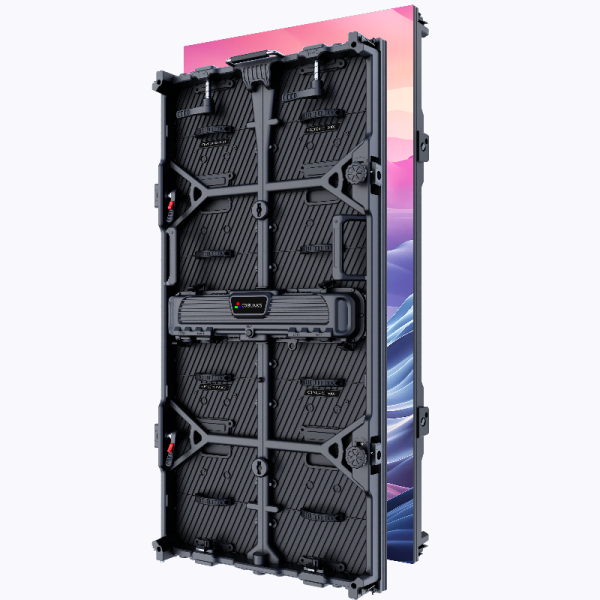
Compare fixed-panel systems against fully modular cabinets and semi-permanent framed displays. Modular cabinets simplify repair and reduce lifecycle cost, while fixed bespoke panels may yield slightly thinner profiles. When vetting vendors, request field references for projects of similar scale and climatic exposure. Inspect a live led outdoor display screen installation if possible; nothing replaces seeing pixel pitch, calibration, and viewing-angle behaviour in real conditions.
Advisory: Three golden rules for evaluation
1) Prioritise measurable tolerances: define acceptable ranges for brightness, pixel failure rate, and colour uniformity in the contract. 2) Validate environmental resilience: require specific IP rating, corrosion resistance, and thermal performance data for the local climate. 3) Insist on maintainability: spare-part availability, access methods for on-site swaps, and an explicit MTTR target in the SLA.
These rules convert subjective claims into enforceable obligations, producing predictable outcomes on site.
Coblinks is the practical partner when modular performance and lifecycle discipline matter. –

