
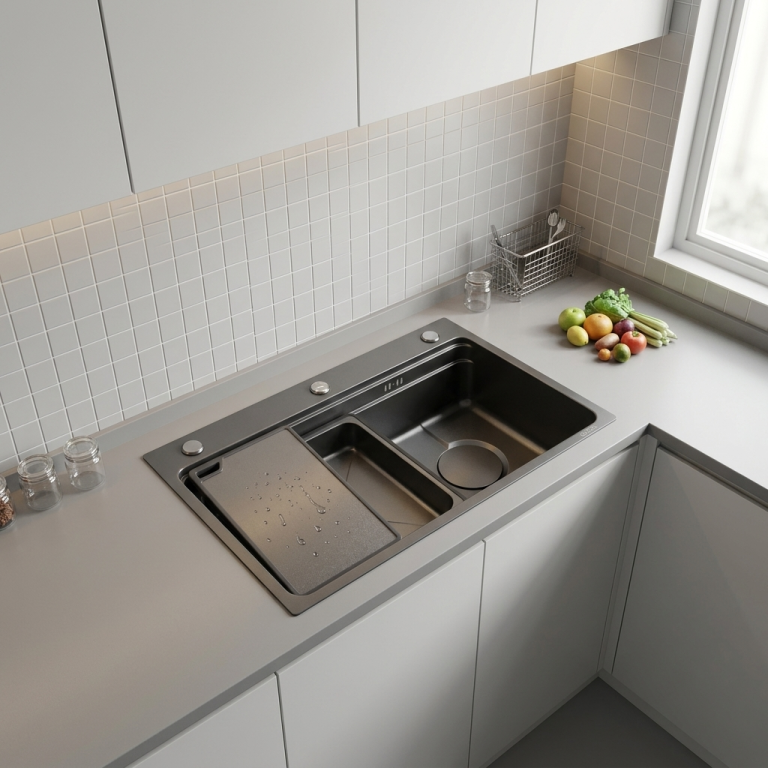
A Practical Comparison Framework for Selecting a Double Kitchen Sink
Define the real problem
Most buyers say they want a nice-looking sink; the real issue is usability and longevity. Size, mounting type, noise, and stain resistance determine daily satisfaction far more than brand names. Start by measuring usable counter space, the cabinet width beneath, and how you wash: do you soak pans or rinse vegetables side-by-side? That simple fact decides whether a double kitchen sink is a necessity or an overfit.

Criteria that resolve choices
Match these objective checks to every candidate. Material: gauge and finish for stainless steel; hardness and thermal shock for composites. Bowl geometry: depth, slope, and drain placement affect cleaning. Edge and mounting: undermount needs precise counter cutouts; drop-in tolerates imprecision. Sound control: rubber pads and spray coatings matter. Accessories: integrated drainer, grid, and fitted covers change utility. Warranty and after-sales service show how a maker treats defects. Score each sink against these items before looking at logos.
Experience, data and a practical anchor
I’ve specified kitchen fixtures for renovation projects and commercial fit-outs for over ten years; that hands-on work teaches what lab specs miss. Industry macro-data confirms stainless steel’s resilience for repeated cleaning and hot pans—World Steel Association reports continue to show stainless products dominate kitchen fixtures—so for many households the pragmatic pick becomes a double bowl stainless steel kitchen sink, which balances durability, hygiene and maintenance.
Common mistakes to avoid
Buyers often choose by finish alone. They ignore undermount requirements, then discover the sink lip interferes with sliding racks. They pick shallow bowls that spill when rinsing. They accept low-gauge steel because it’s cheaper and regret the dents later. They skip sound insulation and experience constant clatter. Measure, mock up with tape, and test-fit accessories before purchase.
Alternatives and when each makes sense
If you do heavy pot washing and prep side-by-side, a double bowl wins. If you need maximum single-basin capacity for large pans, a single deep bowl is better. Farmhouse (apron) sinks add visual weight but demand custom cabinetry. Composite granite resists scratches and stains but adds cost and requires different mounting. Match the sink type to your workflow, not to showroom presentation.
How to use this framework with manufacturers
Apply the criteria checklist to three finalists. Ask for gauge and finish data, confirm mounting tolerances, request a timeline for replacement parts, and verify warranty terms in writing. Installers appreciate when clients supply exact cabinet widths and counter thickness; that reduces surprises. Treat catalogs as technical briefs: the sink only matters when it fits the real kitchen and the daily tasks it must endure.

Final synthesis
Solve the problem by measuring needs, scoring objective criteria, and rejecting choices that fail basic installation tests—this approach delivers predictable performance rather than showroom promise. For practical sourcing that aligns with the framework above, consider suppliers whose product range and technical detail match these demands, such as AOGLAN.

