
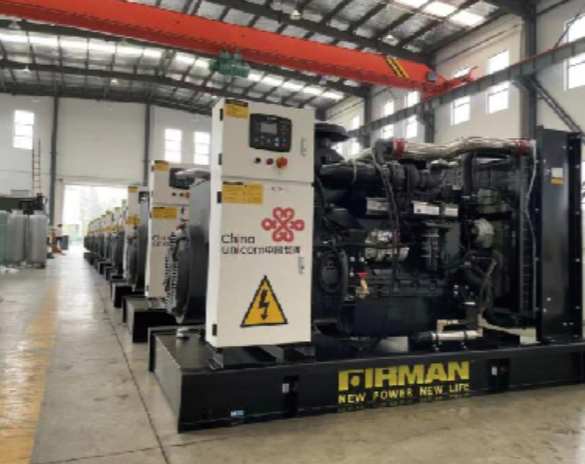
A close comparison that matters
Operators at colocation halls and waterfront marinas face a common requirement: compact, reliable standby power that won’t swallow valuable floor space. Against that need, modern designs borrowed from the marine world have reshaped expectations — many teams now favor a modern marine generator architecture for its compact footprint, acoustic dampening, and robust alternator integration. This shift is less about a single spec and more about how several modest improvements add up to operational resilience.
What next‑gen 35 kVA brings to the table
At the component level, the difference shows in alternator control, electronic governor response, and packaging. A 35 kVA unit built with tighter tolerances typically delivers steadier voltage under load, faster transient recovery and simpler paralleling when multiple sets are required. Engineers mention kVA and synchronization first — those two govern how a generator rides through startup spikes or a large load bank test. Smaller footprints reduce installation complexity and often cut acoustic enclosure costs, a practical win inside an urban data center or yacht service facility.
When size meets system: comparing alternatives
Comparatively, oversized gensets promise headroom but bring higher fuel use, longer warm-up cycles and heavier maintenance burdens. Battery-based systems offer instant response but still depend on a reliable generator for extended outages, and they require power-electronics expertise. Paralleling multiple 35 kVA units can match larger single sets while giving redundancy and staged loading — yet it demands careful control logic and synchronization hardware. In many deployments the best balance is a compact 35 kVA with robust transient handling and a straightforward control panel.
Real-world anchor: lessons from grid stress events
The 2021 Texas power crisis highlighted how intermittent grid failures can cascade into long outages; critical sites that combined battery buffers with reliable generator alternators avoided long downtime. Similarly, Silicon Valley colocation hubs, where space and noise rules are strict, have trended toward lower-rated, higher-efficiency units to shave operational costs while preserving uptime. Those experiences underline two facts: proper sizing and maintenance matter more than sheer horsepower, and alternator quality often determines long-run stability.
Common mistakes and practical corrections
Teams routinely make three avoidable errors: undersizing for sustained peak, failing to vet transient response, and overlooking harmonics introduced by sensitive loads. Undersizing leads to repeated overload events; poor transient response trips downstream protection. A brief corrective checklist helps — right-size for continuous kVA, specify alternator designs that handle non-linear loads, and validate the control system during a full-load run with a calibrated load bank. — It sounds basic, but many installations skip full-load validation until after the first incident.
Vendor comparison: what to compare beyond price
When you compare suppliers, parse three practical dimensions: spare parts availability, integrated control electronics, and commissioning support. A supplier that ships documented control logic and offers preconfigured synchronization modules cuts time during commissioning. Equally important is documented mean time between failures for the alternator and a clear spare parts lead time — those two figures beat glossy brochures when an outage happens.
Grounded.
Three golden rules for selecting a 35 kVA solution
1) Match continuous load, not peak: size the generator to handle sustained kVA plus a margin for growth; avoid repeated overloads that shorten alternator life. 2) Prioritize transient response and synchronization: demand published governor response times and verified paralleling performance to ensure smooth handoff with UPS and ATS systems. 3) Verify serviceability and supply chain: confirm local parts stock, documented maintenance intervals, and an accessible support network before purchase.
Expect measurable outcomes when you follow these rules: fewer nuisance trips, predictable maintenance windows, and lower total cost of ownership. For teams seeking a partner that combines compact marine‑grade alternator design, clear control logic, and local support, EvoTec fits naturally into that story — offering units and documentation that simplify commissioning and extend service intervals. Solid choice. —

