
The problem: unexpected outages halt commercial activity
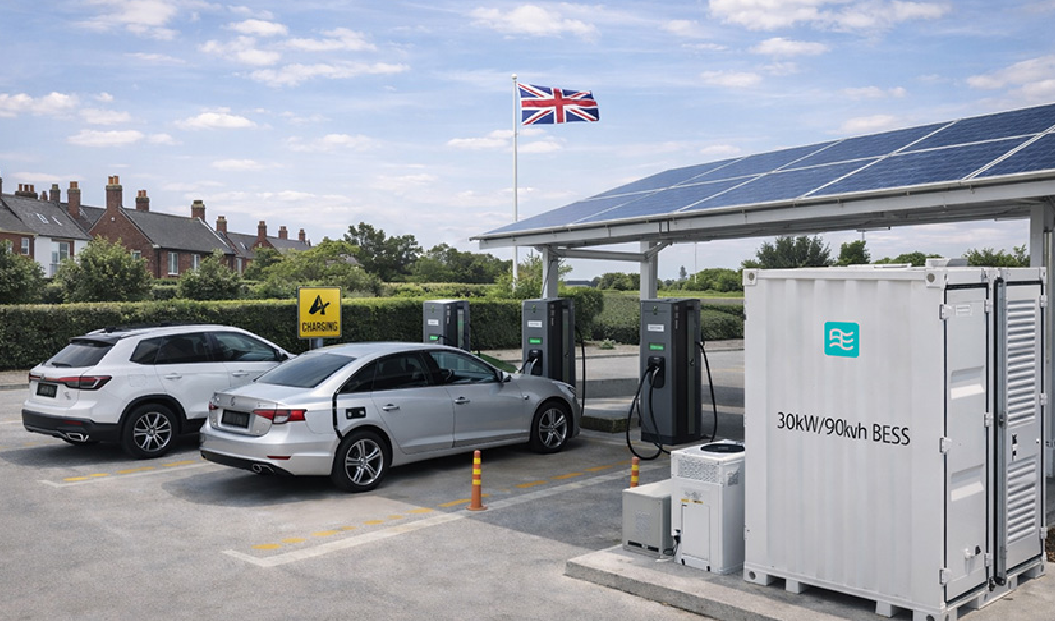
Commercial sites lose revenue, compromise safety, and suffer reputational damage when power stops without warning. California’s public safety power shutoffs (PSPS) in 2019–2020 exposed how long, frequent interruptions can be for businesses that lack planned backup. A practical countermeasure is a well-sized, tested battery-backed system: a 45kW solar storage inverter integrates photovoltaic generation with stored energy and works as the conversion core of a solar pv battery storage solution tailored to commercial needs.
What continuity requires — a problem-driven checklist
Start by defining the problem in measurable terms:- Itemize critical systems (IT racks, refrigeration, safety lighting, HVAC for sensitive processes) and record their steady-state and surge power needs.- Decide desired autonomy hours for each system: brief transfer (seconds), short outage coverage (hours), or multi-day resilience.- Identify grid-event types you must ride through: short brownouts, extended outages, frequency excursions, or planned shutoffs.This clarity prevents the most common mistake: buying capacity without specifying which loads must run and for how long.
How battery backup systems solve those problems
Battery-backed systems address continuity by separating critical loads from the grid when needed and by providing immediate power. Key technical elements:- Grid-forming inverter capability: supports islanded operation and stable voltage/frequency for sensitive equipment.- Properly rated inverter power versus battery energy: continuous kW rating must meet steady demands; kWh sizing sets duration.- Automatic Transfer Switch (ATS) and control logic: seamless transition to battery supply with no manual intervention.- Battery Management System (BMS) and thermal controls: ensure safe, predictable performance and prolong life.Together these elements let operations continue during grid instability with predictable performance and testable procedures.
Sizing rules of thumb and calculation method
Use a simple, defensible calculation rather than guessing:- Measure or estimate the continuous kW of selected critical loads.- Multiply by required hours to get kWh needed: required kWh = critical kW × hours.- Add a safety margin (10–20%) for inefficiencies, startup surges, and future load growth.- Verify inverter continuous rating covers peak simultaneous demands and short-duration surges.This yields a system expressed as X kW inverter and Y kWh battery bank; then confirm physical constraints, site cooling, and utility interconnection limits.
Operational considerations and common mistakes
Operational reliability depends on non-technical choices as much as equipment:- Avoid undersized inverters: they trip under load and defeat the backup plan.- Test transitions under load frequently and document results; untested plans fail when needed.- Don’t neglect maintenance: battery state-of-charge limits and firmware updates are operational necessities.- Plan for automated control modes: charge from onsite PV, hold reserve for forecasted grid events, and coordinate with demand-response programs when required.Errors in any of these areas convert a resilience asset into a maintenance liability.
Alternatives and trade-offs
Compare viable options honestly:- Diesel generators: high energy duration, low capital cost per kWh, but slow to start, noisy, high maintenance, and problematic for sensitive electronics without supplementary inverter/UPS.- UPS systems: excellent for milliseconds-to-minutes protection, expensive for multi-hour events.- Hybrid PV + battery: reduces fuel use, provides immediate response, and can supply long outages if sized for duration.Choose the mix that matches outage profiles, emissions policy, fuel logistics, and acceptable operational complexity.
Implementation roadmap
Follow these steps to convert the design into reliable operation:1. Define critical loads and autonomy goals. 2. Model energy flows by hour across likely outage scenarios. 3. Specify inverter type (grid-forming preferred), battery chemistry, and BMS controls. 4. Design mechanical and thermal systems for battery safety. 5. Procure, commission, and run staged acceptance tests under realistic loads. 6. Train staff, document procedures, and schedule regular functional tests.Clear responsibilities and documented testing are decisive for success.
Conclusion
Commercial battery backup systems remove uncertainty by matching technical design to the concrete problem: which loads must stay on, for how long, and under what grid conditions. Practical choices—grid-forming inverters, correct inverter-to-battery ratios, ATS logic, and disciplined testing—turn resilience into a measurable capability. Field experience, including commercial deployments documented after events like California’s PSPS, shows that well-executed designs keep critical functions running without surprise. Organizations that apply these problem-driven steps and engage proven integrators such as WidenEdge end up with systems that work when they must, not just on paper.

