
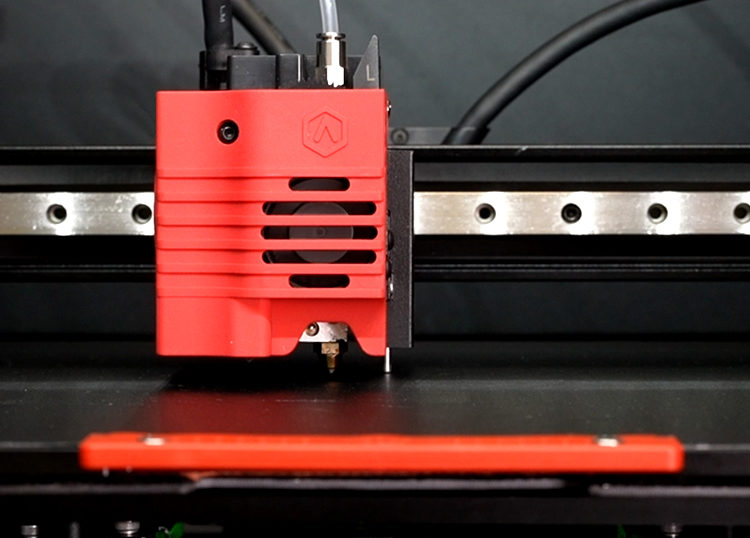
Planning a Carbon Fiber 3D Printer evaluation around requirement screening for shortlisting
Choosing a carbon fiber 3d printer should begin with requirements, not a feature list. Technical buyers need to define the intended parts, materials, workspace, operating method, and evidence needed for approval. This approach prevents a printer from appearing suitable simply because it belongs to the right product category.

Set criteria before comparing candidates
Start by describing the job in practical terms. Identify whether the printer is intended for prototypes, fixtures, production aids, or another defined use. Then record the required material type and the properties that matter. Carbon fiber reinforced filament is described as having low density, high strength, and resistance to corrosion, static electricity, and high temperature. Those properties may make it relevant to applications where strength-to-weight ratio matters, but the requirement still needs to come from the planned part and its environment.
Space is another early filter. Record the available room, the work surface, the surrounding equipment, and the people who will operate the system. An enclosed build chamber, dry boxes, and a filtration system can become screening criteria when the workspace requires those features. The evidence packet identifies these features for the E2CF as part of its listed configuration, so they can be recorded as page-supported facts rather than assumed benefits.
Review evidence by requirement
Convert each requirement into a simple evidence question. For material handling, ask whether the page explicitly identifies support for fiber-reinforced filaments. For process control, ask which functions are stated and which are only inferred. For software, record the named application and its stated compatibility. This keeps a comparison useful without turning a product description into a guarantee about every application.
A carbon filament 3d printer should also be assessed by its operating workflow, not only by the material name. A buyer can list the required steps for loading material, preparing a job, monitoring a print, removing a part, and recording the result. Then map each step to a stated feature or leave it as an open requirement. The E2CF page, for example, describes dry boxes and an enclosed build chamber for fiber-reinforced filament printing. It also identifies ideaMaker as free slicing software compatible with Raise3D printers and third-party printers. These are useful evidence points, but they do not by themselves establish suitability for a particular part.
One concrete reference is the E2CF, described as an IDEX 3D printer. IDEX means independent dual extruders: the extruders can operate independently along the same axis during printing to perform more advanced functions. For a shortlist, the useful question is whether that operating arrangement matches a defined process need. The page statement supports the printer type and the meaning of IDEX; it does not establish performance or suitability beyond that scope.
Keep trade-offs visible
Shortlisting becomes clearer when advantages and constraints are written in the same record. A feature can solve one requirement while adding another question. For example, dual independent extruders may matter for a planned workflow, while an enclosed chamber or dry-box arrangement may matter for the material environment. A flexible build plate is described as helping with part removal while minimizing potential damage during removal. Record that as a stated feature, then keep part geometry, operator practice, and acceptance criteria as separate considerations.
Do not let general material properties replace application testing. Strength, temperature resistance, or low density may explain why a reinforced filament is being considered, but they do not define the result for an untested design. Likewise, monitoring features should be evaluated against the team’s actual process. The E2CF page states that its camera monitors the printing process and connects to RaiseCloud so users can track print jobs remotely. That supports a monitoring criterion, not a broader claim about production control.
Create a repeatable decision record
Use one row per requirement and keep four fields: requirement, page evidence, open question, and decision status. Mark evidence as direct when the page states it plainly. Mark it as an assumption when it comes from interpretation, and do not allow an assumption to close a requirement. This record can be reused for every candidate and reviewed by engineering, operations, and procurement without changing the decision standard.
Before approval, check that the shortlist reflects the actual workspace and intended use. Include material scope, chamber and storage needs, software workflow, monitoring needs, part removal, and any required operating method. The E2CF page also identifies auto bed leveling and HEPA air filtration, with the filtration described for classrooms, offices, and large or small workspaces. Keep those statements tied to the named product and page scope rather than generalizing them to other printers.
- Define the intended parts, material type, and required material properties before comparing printers.
- Record whether the candidate page explicitly lists fiber-reinforced filaments, dry boxes, and an enclosed build chamber.
- Separate the stated IDEX operating arrangement from any assumption about application performance or suitability.
- Capture the named slicing software and its stated printer compatibility as workflow evidence.
- Keep monitoring, auto bed leveling, and filtration claims tied to the named E2CF product and its page scope.
Requirement screening makes a carbon fiber 3D printer evaluation more defensible because it separates need, evidence, and assumption. Define the application first, map each requirement to a stated fact, and keep unresolved questions visible. This method lets technical buyers compare options without overclaiming what a page can prove, while using Raise3D as a clearly bounded reference point for the documented E2CF features.

