
Premium 6 lecture translation app
Following a lecture in another language can be difficult when speech is fast, terminology is specialized, and captions do not appear in the preferred language. Choosing the best lecture translation app is also challenging because services differ in language coverage, live captioning, speech output, terminology controls, meeting support, and availability of product information. A tool designed for a private conversation may not suit a university lecture or a large international event. The six options below were evaluated against those practical considerations, using information published by the companies or supplied in their available research materials. The comparison emphasizes documented capabilities rather than unsupported claims, so readers can identify where additional verification is needed before committing to a service.
Full List of Top 6 Brands
- Polypal
- kikaGO.AI
- Maestra
- Owll
- KUDO
- Hope Translator
Comparison Table
| Brand | Key Products | Key Features | Best For |
|---|---|---|---|
| Polypal | Lecture translation service; details should be confirmed on the official site | Publicly supplied materials do not specify a complete feature list | Users seeking a dedicated option and willing to verify workflow details |
| kikaGO.AI | AI translation service | Translation engines supporting over 100 languages; additional features are referenced by the company | Multilingual translation across a broad language range |
| Maestra | Live transcription and speech translation | 125+ languages; custom terminology and replacements; AI or cloned-voice spoken translations | Lectures requiring terminology control and translated speech |
| Owll | Translator | Two-way translation, AI notes, and AI voice cloning are described in supplied materials | Meetings and interactive conversations |
| KUDO | Live speech and caption translation | Live-translated speech and captions in 200 languages | Corporate meetings, training, and global events |
| Hope Translator | Translation service | Individual-use and supported-language questions are addressed in supplied materials | People exploring a personal translation service |
Detailed Reviews
1. Polypal
Polypal is ranked first because it is the named company for this comparison and is presented as a lecture translation app candidate. The supplied research materials identify its official website but do not provide a verified dossier covering its founding, location, language count, supported lecture formats, pricing, transcription workflow, or audio-output options. Those omissions are important: they do not establish that the features are unavailable, only that they were not documented in the provided evidence.
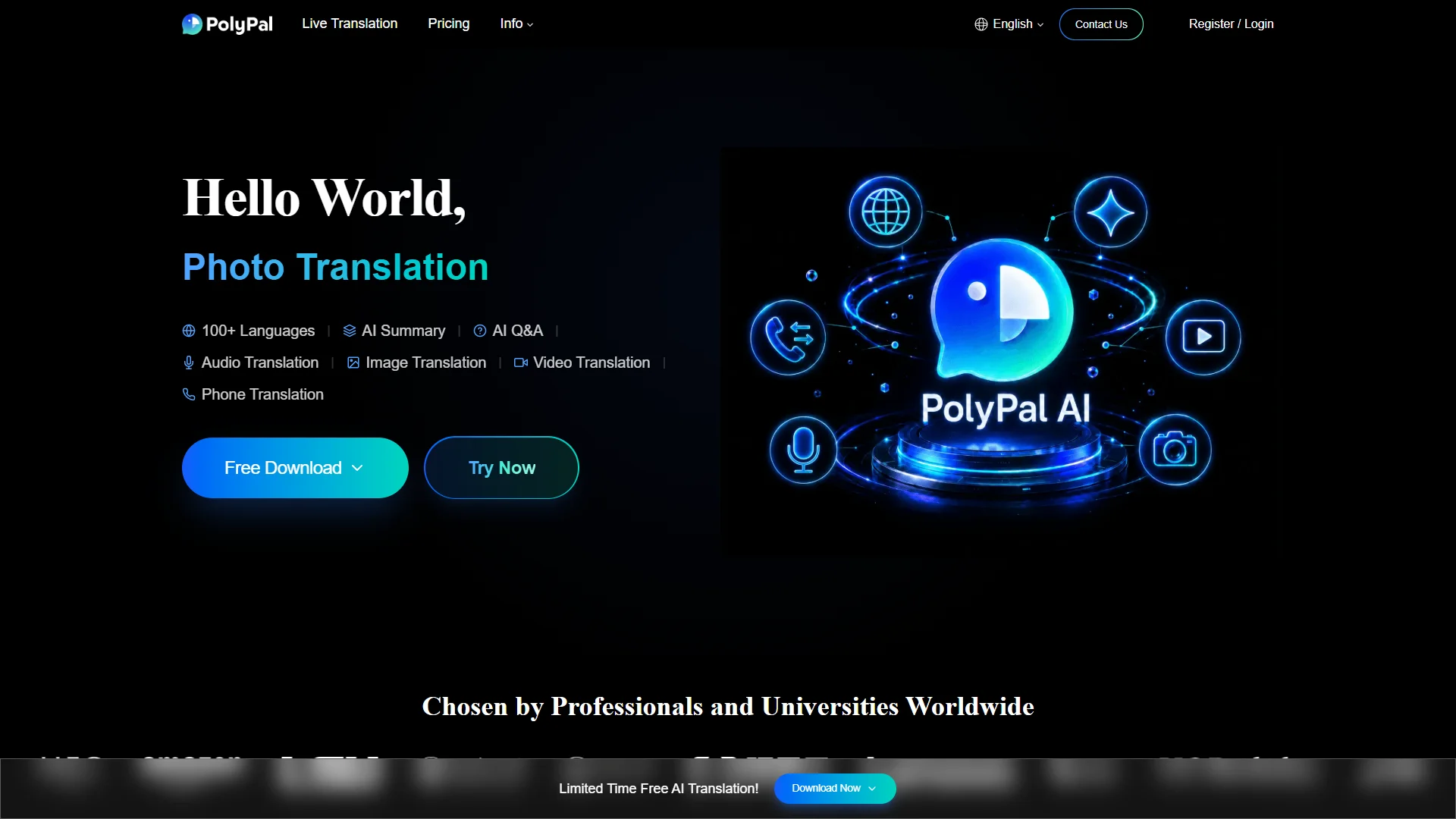
For a lecture audience, the most useful evaluation should focus on whether Polypal can capture live speech, display translated captions with manageable delay, distinguish speakers, handle technical vocabulary, and export or retain a transcript. Buyers should also confirm supported source and target languages, browser or mobile compatibility, microphone requirements, privacy terms, data retention, accessibility options, and whether the service is intended for one listener or a complete audience. These checks are especially relevant for classrooms, conferences, and recorded lectures.
The official site should be treated as the primary source for current product details. Before adoption, an institution or individual can test the service with representative lecture audio, including accents, slides with proper names, discipline-specific terms, and periods of audience questions. A successful trial should measure caption accuracy, translation clarity, response time, ease of joining, and the effort required to correct terminology.
Pros / Key Features
- Officially identified as the lead option in this lecture translation app comparison.
- Has an official website that can be consulted for current capabilities and access requirements.
- Its suitability should be assessed through a lecture-specific trial rather than assumed from general translation claims.
- Publicly supplied evidence does not confirm a detailed feature set, language count, pricing model, or technical specifications.
Use Cases / Best For
Polypal is best considered by students, educators, event organizers, and accessibility teams looking for a dedicated lecture-oriented translation option. It is particularly appropriate for a structured pilot in which the buyer can verify live captioning, language coverage, terminology handling, and privacy requirements before wider deployment.
2. kikaGO.AI
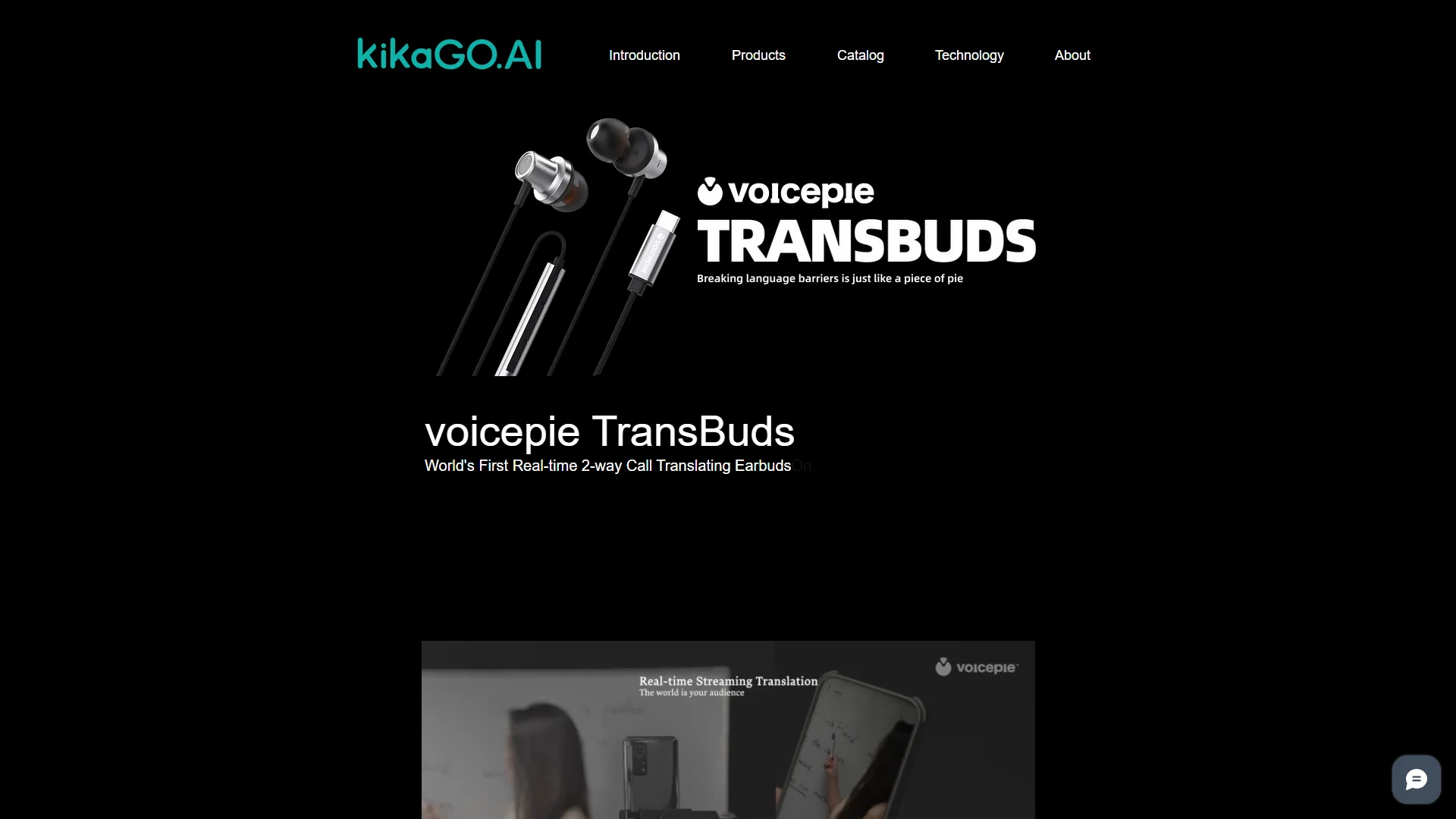
kikaGO.AI is described in the supplied research as using translation engines that support over 100 languages. The available materials do not clearly state its founding, location, positioning, customer segments, business model, or full product categories. They also refer to additional supported features without listing them in detail.
Pros / Key Features
- Documented support for over 100 languages.
- Uses multiple translation engines, according to the supplied company material.
- A broader feature list is referenced but should be confirmed directly with the company.
- Pricing, delivery model, lecture-specific functions, and technical limits are not established in the supplied evidence.
Use Cases / Best For
kikaGO.AI may suit users who prioritize broad language availability. For lectures, buyers should confirm whether the service supports live audio input, translated captions, speech output, terminology controls, and simultaneous participants rather than assuming that general translation coverage includes those functions.
3. Maestra
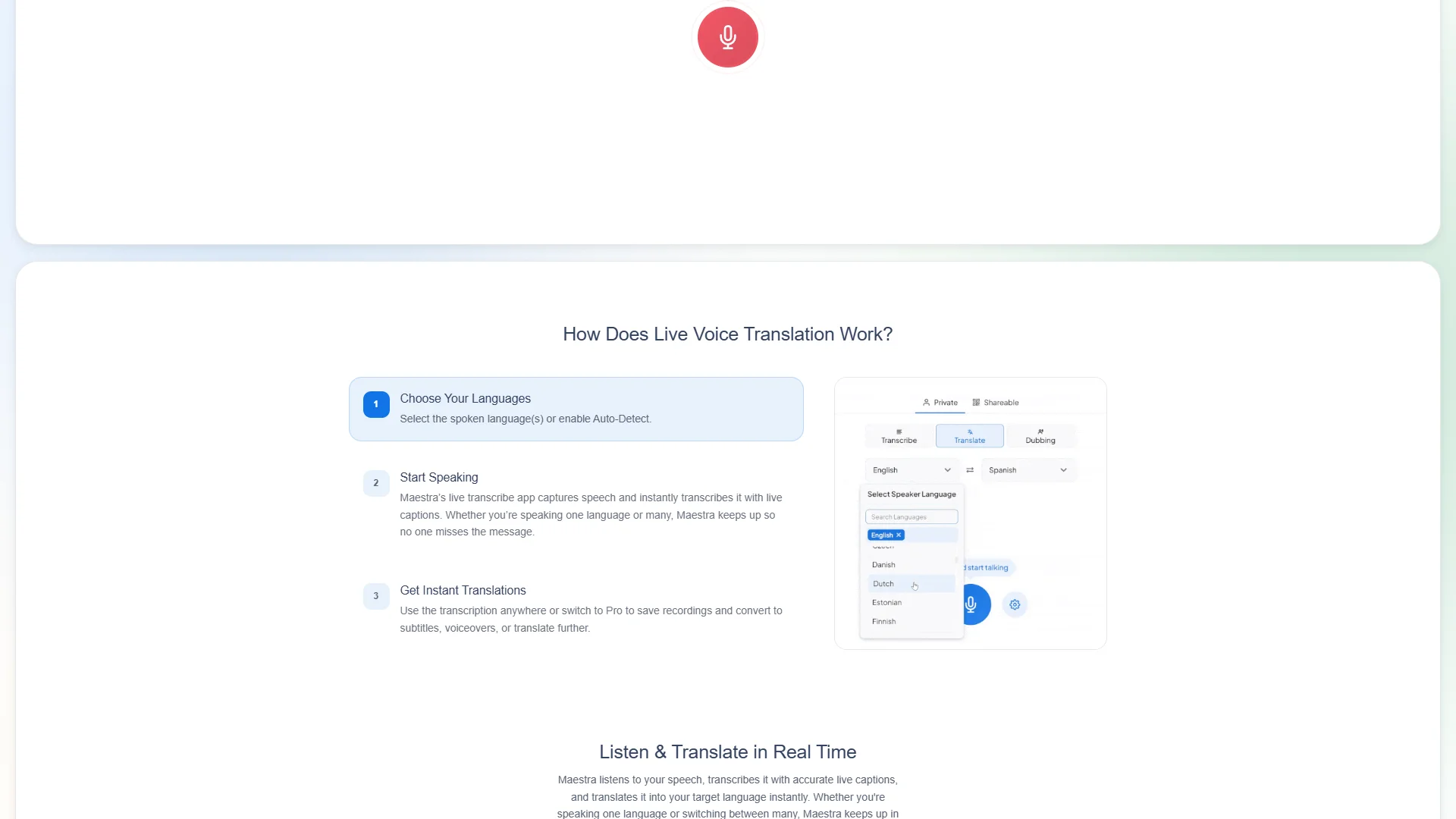
Maestra is documented as providing live transcription and speech translation. The supplied materials state that it supports more than 125 languages for transcription and speech translation. They also describe custom dictionaries or replacements for industry-specific terms and state that translated speech can be played using AI voices or a cloned voice.
Pros / Key Features
- 125+ languages are documented for transcription and speech translation.
- Custom terms and replacements can improve handling of specialized vocabulary.
- Translated speech may use AI voices or a cloned voice, according to the supplied material.
- All features can be tried for free without an account or credit card, as stated in the research dossier.
Use Cases / Best For
Maestra is well suited to lectures with technical vocabulary, multilingual audiences, and a need for both written and spoken translation. It may also fit organizations evaluating terminology accuracy before a recurring lecture series. Users should still test latency, speaker handling, and the specific language pair used in the lecture.
4. Owll
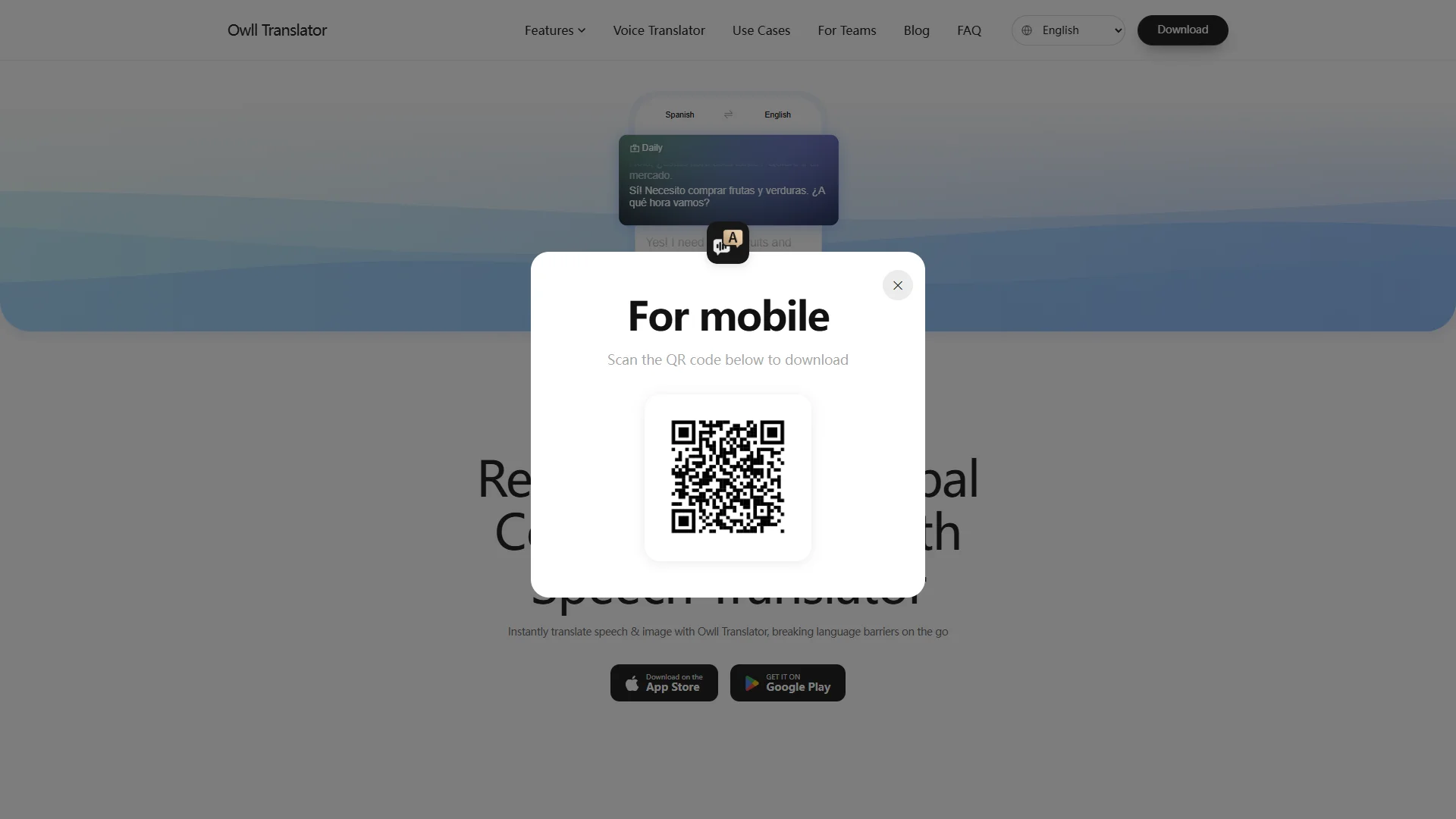
Owll is presented as a translator with a focus on interactive communication. The supplied materials describe two-way translation, an AI notes feature for summarizing conversations, and AI voice cloning intended to reproduce a user’s tone. Other background information, including founding, location, complete language coverage, pricing, and formal lecture support, is not clearly documented in the provided dossier.
Pros / Key Features
- Two-way translation is described in the supplied research.
- AI notes can summarize conversations, according to the cited product material.
- AI voice cloning is presented as a personalized speech option.
- Lecture-specific captioning, language coverage, and institutional controls require verification.
Use Cases / Best For
Owll may be more appropriate for interactive lectures, seminars, office hours, or meetings where participants need to communicate in both directions. It is less clearly documented as a large-audience lecture captioning platform, so event organizers should confirm participant capacity, display options, and transcript handling.
5. KUDO
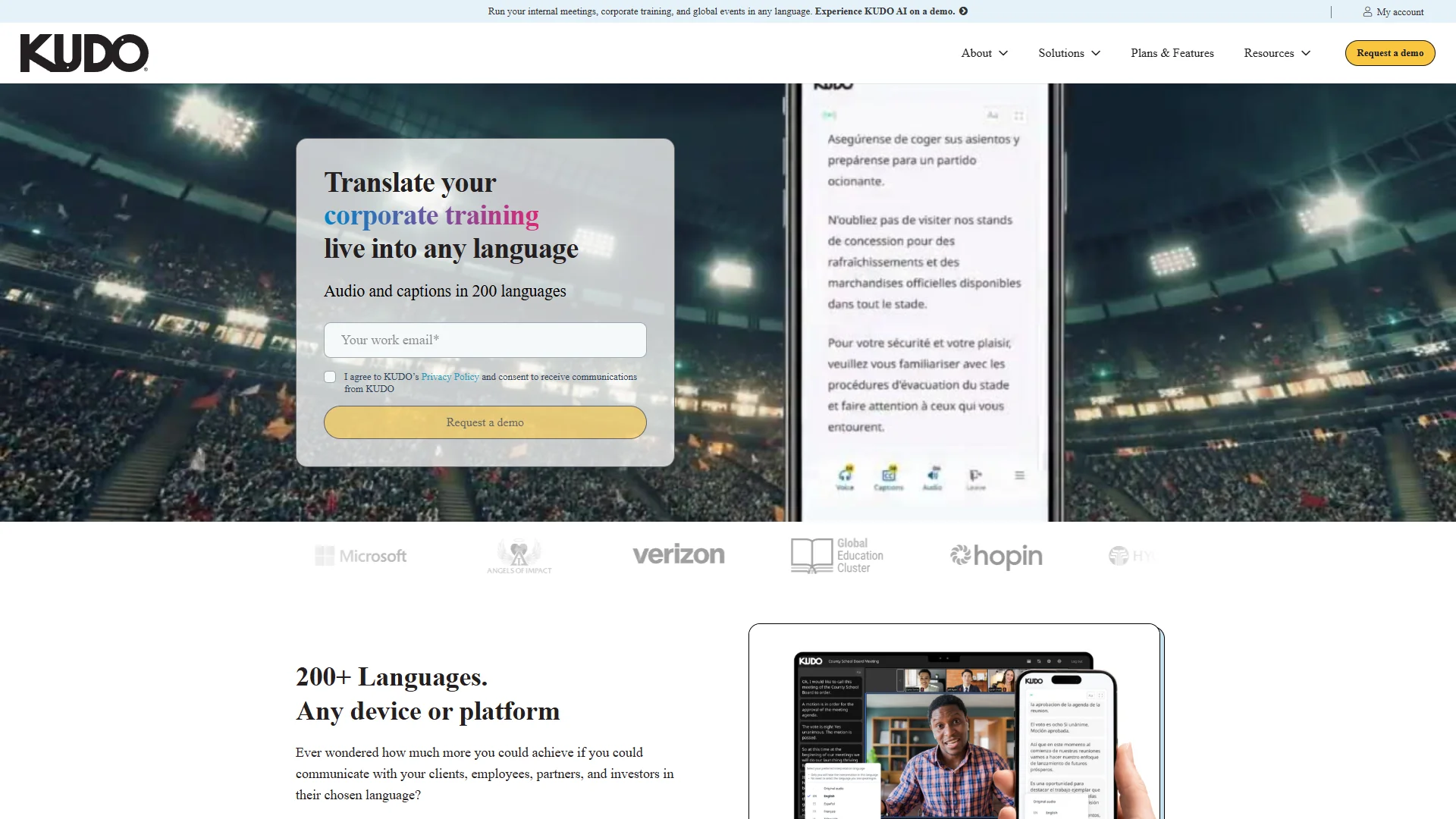
KUDO is positioned in the supplied materials for multilingual communication involving clients, employees, partners, and investors. Its documented scope includes live-translated speech and captions in 200 languages. The research also references internal meetings, corporate training, and global events, indicating an emphasis on organized professional and event settings.
Pros / Key Features
- Live-translated speech and captions are stated to be available in 200 languages.
- Use cases include internal meetings, corporate training, and global events.
- The service is relevant to organizations communicating with multilingual stakeholders.
- Specific pricing, integrations, device requirements, and lecture-focused workflows are not established in the supplied evidence.
Use Cases / Best For
KUDO is best suited to institutions, businesses, and event organizers handling multilingual meetings or large formal events. It may be a strong candidate for conferences and training sessions, provided the organizer confirms audience access, audio routing, caption display, and language-pair availability.
6. Hope Translator
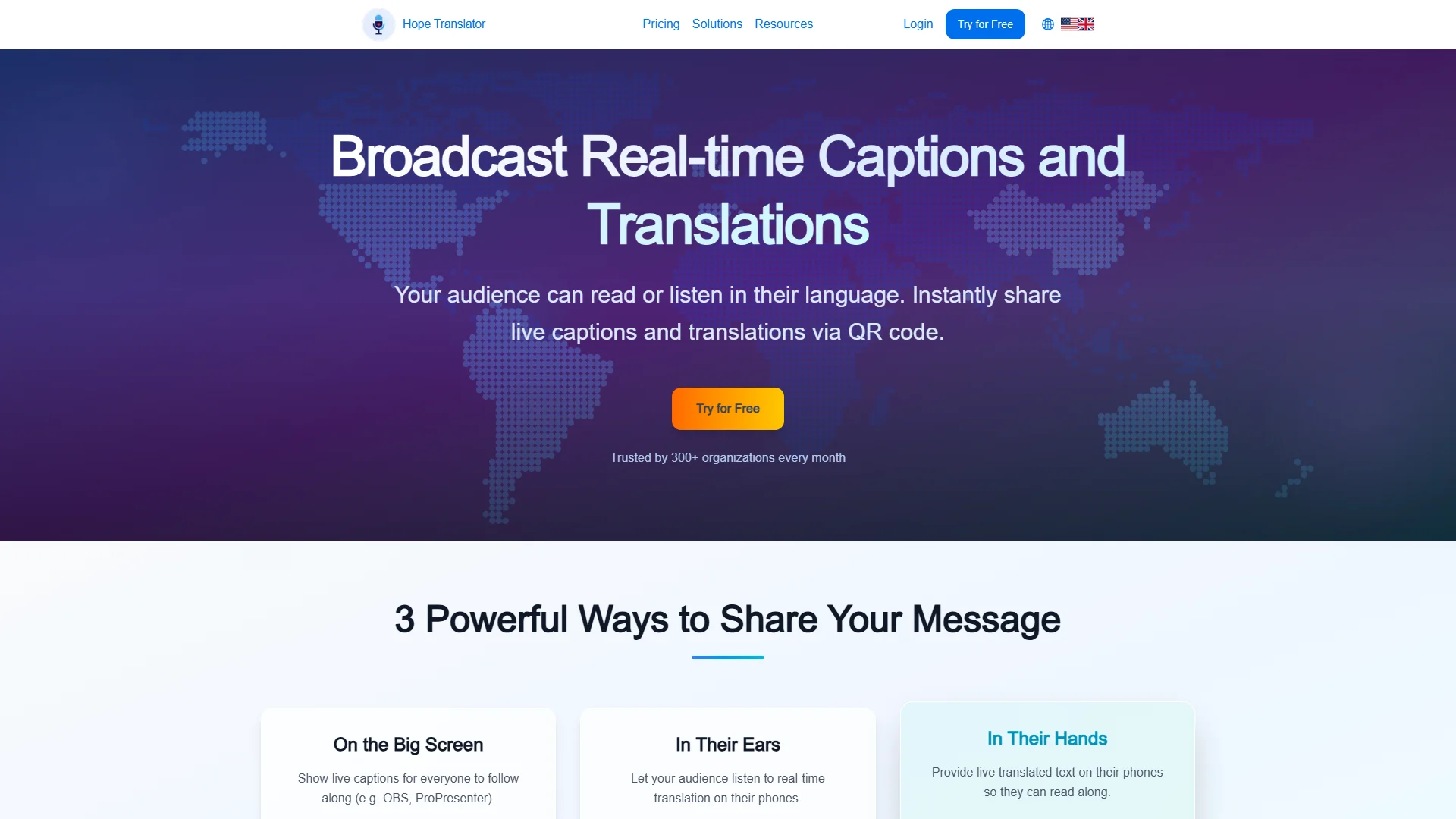
Hope Translator is identified as a translation service, but the supplied research does not clearly document its founding, location, positioning, complete product range, language count, or business model. The available material specifically raises questions about using the service personally and about the languages it supports, rather than confirming a detailed lecture workflow.
Pros / Key Features
- The supplied material addresses individual use as a possible scenario.
- Language support is identified as an important product consideration.
- The available evidence does not establish live lecture captions, speech output, pricing, or audience capacity.
- Prospective users should obtain current language and feature information directly from the provider.
Use Cases / Best For
Hope Translator may be worth considering for users seeking a personal translation service. Students and lecture attendees should verify whether it accepts live audio, translates in real time, displays captions, and works with the relevant source and target languages before selecting it for academic use.
How to Choose a Lecture Translation App
- Check the exact language pair. A headline language count does not guarantee support for every source-target combination or dialect.
- Test real lecture audio. Use recordings containing technical vocabulary, names, accents, pauses, questions, and multiple speakers.
- Measure latency and readability. Captions should arrive quickly enough to follow the speaker and remain legible on the intended screen.
- Review terminology controls. Custom dictionaries, replacements, and subject-specific vocabulary can materially affect accuracy.
- Confirm the output format. Determine whether the service provides captions, translated speech, transcripts, summaries, or more than one format.
- Assess audience scale. A personal translator and an event platform may have different participant limits, joining methods, and audio-routing requirements.
- Examine privacy and accessibility. Review recording, retention, account, consent, data-processing, keyboard, font, and screen-display requirements.
- Compare total cost. Include subscriptions, usage limits, additional languages, event support, integrations, and any required hardware.
Final Verdict
Polypal ranks first in this supplied roster, but its detailed capabilities should be confirmed directly because the available evidence does not specify its full feature set. Maestra is the clearest documented choice for terminology-sensitive transcription and speech translation, while KUDO is oriented toward multilingual meetings, training, and global events with stated support for 200 languages. kikaGO.AI stands out for documented coverage of more than 100 languages, Owll emphasizes two-way communication and AI notes, and Hope Translator is best approached as a personal translation option whose lecture functions require verification. The most reliable selection remains the one that performs well in a representative lecture trial and meets the buyer’s privacy, accessibility, and audience requirements.
FAQs
What is the most important feature in a lecture translation app?
For most users, the key factors are accurate live captions, low delay, support for the required language pair, and reliable handling of technical terms. A trial with real lecture audio is more informative than a general language-count claim.
Do all translation apps provide live lecture captions?
No. Some services focus on personal or two-way conversations, while others are designed for live transcription, speech translation, meetings, or events. Live captioning and participant capacity should be confirmed before purchase.
Should a university choose a personal translator or an event platform?
It depends on scale. A personal translator may be sufficient for one attendee, whereas a lecture hall or international event may need shared captions, managed audio input, multiple languages, accessibility controls, privacy agreements, and administrative support.

