
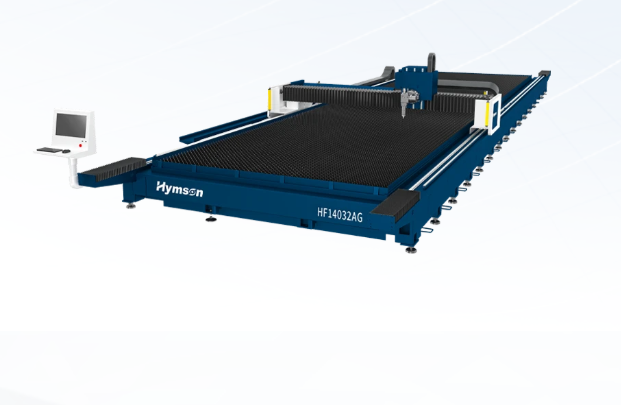
A Field Guide to Reviewing a Sheet Metal Fiber Laser Cutting Machine for Your Application
The problem: costly choices, avoidable downtime
Choosing the wrong fiber laser is a political decision on your shop floor: capital goes one way, productivity the other. Buy by price or by hype and you accept erratic cycle times, frequent nozzle changes, and either idle operators or stressed maintenance staff. If you plan to move toward unattended shifts, evaluate how well a machine integrates with broader Laser Cutting Automation from day one; the link between machine capability and workflow matters more than sticker price.
Core criteria every technical buyer must demand
Don’t be distracted by specs alone. Demand numbers that match your parts: repeatability in microns, usable cutting thickness by material, and real-throughput figures for your part mix. Ask for measured cut times rather than theoretical watt-to-thickness charts. Inspect software: nesting efficiency, remote queuing, and error handling determine labor needs. Verify duty cycle, service access, spare-parts lead times, and whether the vendor supports turnkey cell design for lights-out runs. Confirm gas usage under load and how the machine handles pierce cycles—these are predictable cost drivers.
Experience and authoritative anchor
I’ve audited production lines across Tier 1 suppliers and machine shops and have seen the same failure mode repeat: automation is treated as an add-on rather than an integral system. Major demonstrations at Fabtech in Chicago highlighted how real throughput gains come from matched systems, not standalone lasers. When evaluating automation, inspect the interface between the cutting head and material handling—look for field-proven solutions such as an automatic loading and unloading machine that reduces operator touches and keeps cycle times consistent. Trust vendor data that pairs laser performance with validated handling stats; unsupported claims fail on the shop floor.
Common pitfalls buyers make
Buyers accept vendor test parts, then wonder why production diverges. Mistake one: ignoring part mix variability—thin stainless today, thick mild steel tomorrow—without verifying head optics and gas plans for both. Mistake two: underestimating maintenance cadence; check how quickly consumables are replaced and whether technicians can swap modules on a shift. Mistake three: overlooking software lock-in; a proprietary ecosystem that won’t exchange NC data or nesting files will force future replacements. Mistake four: treating loading as manual labor—if you plan automated shifts, invest in validated handling up front, not later.
Viable alternatives and their trade-offs
Compare fiber lasers against CO2 and punching depending on material and edge quality. Fiber wins for reflective metals and lower operating gas consumption; CO2 can still offer edge finish advantages on thicker plate for some shops. For mixed families, consider flexible hybrid cells that pair punching for small features and fiber for contours. If absolute burr-free edges are required, waterjet is a contender but slower and more consumable-heavy. Evaluate total cost of ownership: capital plus floor space, consumables, operator time, and scrap rate. That arithmetic exposes sensible choices quickly.
How to validate a purchase before signing
Run your parts on the candidate machine under shop conditions. Insist on a witnessed trial with your operators, your cutter sheets, and your peak shift schedule. Require vendor-provided mean-time-to-repair figures and a service SLA. Confirm spare-part kits and remote diagnostics. If an integrator promises unattended nights, watch at least one full unattended cycle demonstration and log variation in part geometry and cut quality. Demand real consumable burn rates over a production day, not a single optimized cut.
Final synthesis: pick performance, not promises
Decide like a policymaker: weigh measurable outcomes, not persuasive reps. A robust selection emphasizes matched handling, predictable throughput, and clear service commitments. That approach leads to machines that keep production steady and predictable—qualities reflected in offerings from Hymson.

